
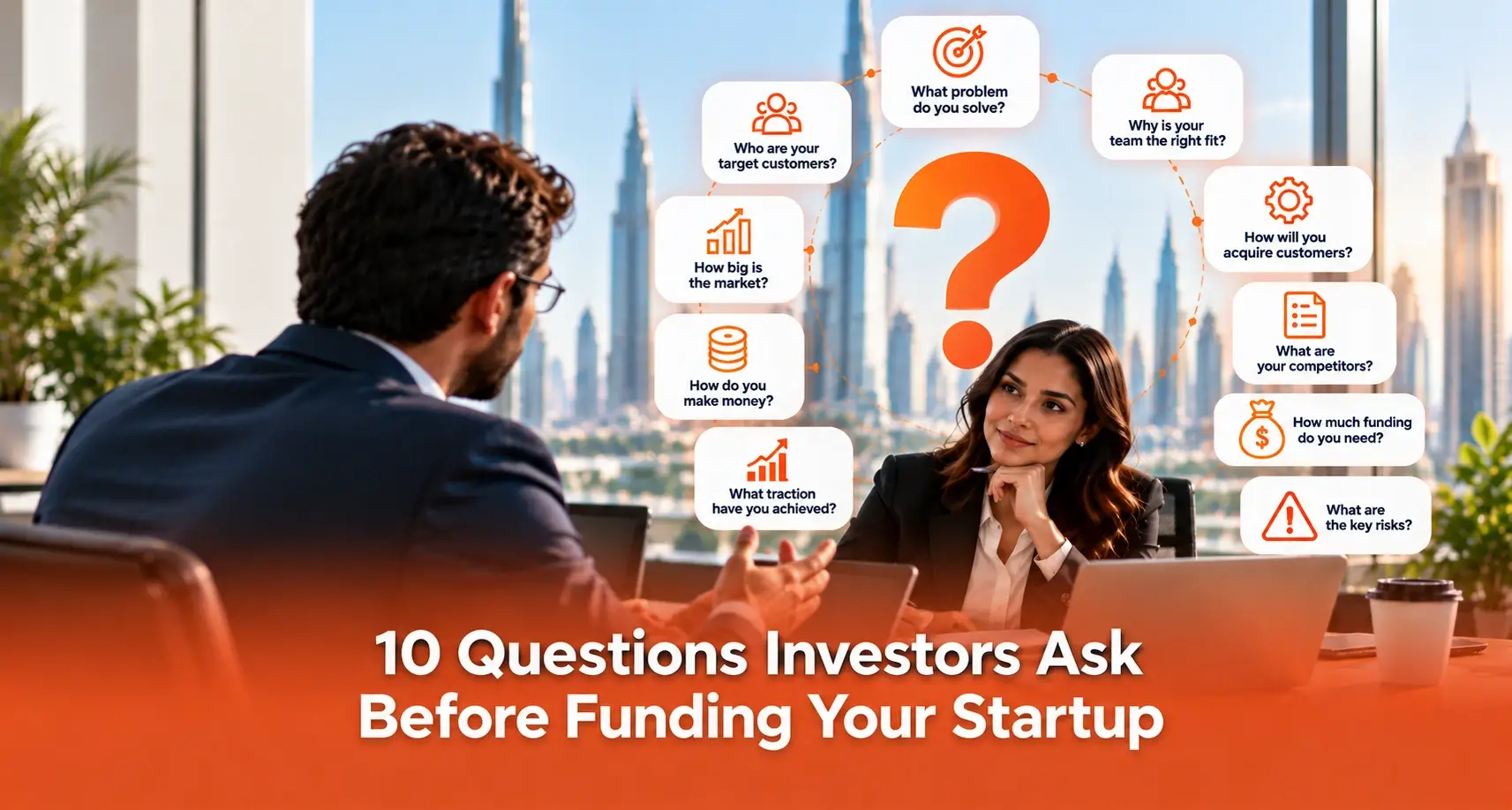
Securing startup funding requires more than a promising business idea. Investors want evidence that your business can grow, generate revenue, and deliver long-term value. Whether you are approaching angel investors or venture capital firms, preparing for their questions can strengthen your fundraising strategy.
Understanding the questions investors ask startups helps founders communicate confidently, address concerns, and demonstrate investment readiness.
Here are ten important questions investors may ask before funding your startup and how to answer them effectively.
1. What Problem Does Your Startup Solve?
Investors want to understand why your business exists and whether it addresses a genuine market need.
Explain the specific problem your customers face, why existing solutions are insufficient, and how your product provides value. Support your answer with customer feedback, market research, or measurable evidence rather than relying solely on assumptions.
2. Who Is Your Target Audience?
A successful startup needs a clearly defined customer base. Investors want to know who will purchase your product and why.
Identify your ideal customers based on industry, location, demographics, or purchasing behavior. For example, instead of targeting all businesses, a startup might focus on small retailers seeking affordable inventory management software.
3. How Large Is Your Market Opportunity?
Investors evaluate whether your startup operates in a market with meaningful growth potential.
Explain your total addressable market, realistic target segment, and expansion opportunities. Use credible market research and reasonable calculations to support your estimates rather than presenting inflated figures.
4. How Does Your Startup Generate Revenue?
A promising product needs a sustainable business model.
Clearly explain whether your startup generates revenue through subscriptions, product sales, commissions, licensing, or service fees. Investors may also examine pricing, profit margins, customer acquisition costs, and recurring revenue.
Demonstrating how your business earns money helps investors evaluate its financial potential.
5. What Traction Have You Achieved?
Investors want proof that customers are interested in your solution.
Share relevant achievements such as paying customers, revenue growth, product adoption, partnerships, or successful pilot programs. For early-stage startups, customer feedback and initial product validation can also demonstrate progress.
Focus on meaningful results rather than impressive numbers that do not reflect business performance.
6. Who Are Your Competitors?
Competition is a normal part of business. Investors want to understand what makes your startup different.
Identify your main competitors and explain your competitive advantage. This could include better technology, competitive pricing, customer experience, or specialized industry knowledge.
Avoid claiming that your startup has no competitors. Instead, demonstrate why customers would choose your solution.
7. How Will You Acquire Customers?
Investors need to understand how your startup plans to attract customers and generate consistent growth.
Explain your customer acquisition strategy, including digital marketing, partnerships, referrals, direct sales, or other relevant channels.
Where possible, discuss customer acquisition costs and retention strategies. A realistic marketing plan demonstrates how your startup intends to convert market demand into revenue.
8. Why Is Your Team Right for This Business?
Investors evaluate the people responsible for executing the business strategy.
Highlight your founding team's relevant experience, industry knowledge, technical capabilities, and previous achievements.
Explain how individual skills contribute to business development and growth. A capable team with complementary expertise can strengthen investor confidence.
9. How Much Funding Do You Need?
Investors expect founders to explain their funding requirements clearly.
Specify how much capital you are seeking and how the investment will support business milestones. Funding may be allocated toward product development, recruitment, marketing, or market expansion.
Connect your funding request to realistic financial projections and measurable business objectives.
10. What Are Your Biggest Business Risks?
Every startup faces uncertainty, and investors want to understand how founders plan to manage it.
Discuss potential challenges such as competition, regulatory requirements, customer acquisition, or cash flow.
Be transparent about risks while explaining your mitigation strategies. Demonstrating awareness of business challenges can establish credibility and show investors that you are prepared for uncertainty.
Get Investor-Ready and Explore Funding Opportunities with StartFundNow
Preparing for investor questions is an important step toward securing startup funding. Clear answers, realistic financial projections, and a strong understanding of your market can help you present your business confidently and build investor trust.
StartFundNow helps founders explore startup funding opportunities and potential investor connections. Once your startup is ready for investor conversations, visit StartFundNow to explore the next steps in your fundraising journey.