
Building a successful startup requires more than a strong idea. Founders also need capital, market validation, a capable team, and a clear growth strategy to turn an opportunity into a sustainable business. For early-stage companies, angel investors can provide valuable funding while also offering industry knowledge, mentorship, connections, and strategic guidance. However, reaching the right investors requires preparation and a thoughtful approach. Understanding effective angel investor outreach strategies can help founders build meaningful relationships, communicate their opportunity clearly, and improve their chances of securing investment.
Understand What Angel Investors Look For
Before beginning investor outreach, founders should understand what makes a startup attractive to angel investors. Angels may evaluate the business opportunity, market size, product or service, revenue potential, competitive advantage, founding team, traction, and growth prospects.
Unlike institutional investors, individual angel investors may also have specific industries, technologies, markets, or business models they prefer to support.
A strong startup should therefore have a clear investment story supported by evidence. Founders need to explain the problem they are solving, why the solution matters, who the customers are, and how the business can grow.
Understanding investor expectations can make angel investor outreach more targeted and productive.
Define Your Funding Requirements
Before contacting investors, founders should determine how much capital the startup actually needs. A clear funding requirement demonstrates that the company has a plan for using investment effectively.
Funding may be required for product development, hiring, technology, marketing, customer acquisition, operations, or entering new markets.
Instead of simply stating that the startup needs money to grow, founders should connect the funding request to specific milestones. For example, investment may help launch a product, acquire a defined number of customers, expand the team, or reach a particular revenue target.
A well-defined funding requirement gives potential investors a clearer understanding of the opportunity.
Validate Your Startup Before Outreach
Market validation can significantly strengthen an investor conversation. Founders should demonstrate that customers have a genuine need for the product or service before seeking substantial investment.
Evidence may include paying customers, early revenue, pilot programs, user growth, partnerships, customer feedback, repeat purchases, or strong engagement.
Even an early-stage startup can demonstrate potential through meaningful validation. Investors are generally more interested when founders can show evidence of customer demand rather than relying entirely on assumptions.
Strong validation can make it easier to attract angel investors for startups and establish credibility during initial discussions.
Create a Strong Investor Pitch
A compelling pitch is one of the most important elements of successful fundraising. Founders should be able to explain their startup clearly and confidently in a short amount of time.
A strong pitch generally covers the problem, solution, target market, business model, competitive landscape, traction, growth strategy, founding team, financial outlook, funding requirement, and use of funds.
The objective is not to include every detail about the company. Instead, the pitch should create a clear narrative that helps investors understand why the opportunity matters and why the startup is positioned to succeed.
Founders should also prepare a professional pitch deck that can support conversations with potential investors.
Learn How to Approach Angel Investors
Knowing how to approach angel investors is just as important as preparing the pitch itself. Founders should avoid sending generic messages to large numbers of investors without researching whether they are suitable for the business.
Before reaching out, founders should consider an investor's previous investments, preferred industries, typical investment stage, geographic focus, and areas of expertise.
Personalized outreach can demonstrate that the founder has taken the time to understand the investor. A short message explaining why the startup may align with the investor's interests can be more effective than a lengthy generic introduction.
The initial objective should be to start a conversation rather than immediately push for an investment decision.
Research the Right Angel Investors
Finding angel investors requires more than searching for people who invest in startups. Founders should identify investors who are genuinely relevant to their business.
Potential investors can be discovered through startup communities, industry events, founder networks, accelerators, incubators, professional platforms, investor groups, and introductions from existing contacts.
Founders should create a list of potential investors and organize information such as their investment interests, previous portfolio companies, location, typical investment stage, and areas of expertise.
This research can help founders prioritize investors who are most likely to understand and support the business.
Use Angel Investor Networking
Relationships can play an important role in fundraising. Angel investor networking gives founders opportunities to meet investors before formally asking for capital.
Industry conferences, startup events, pitch competitions, accelerator programs, entrepreneurship communities, and professional networking events can create opportunities for meaningful introductions.
Founders should focus on building genuine relationships rather than treating every interaction as a fundraising opportunity.
A strong professional relationship can make it easier to introduce the startup, share its progress, and eventually discuss an investment opportunity.
Prioritize Warm Introductions
A warm introduction from someone an investor already knows can sometimes make investor outreach more effective. Founders can ask existing advisors, entrepreneurs, customers, business partners, mentors, or professional contacts whether they know suitable investors.
When requesting an introduction, founders should provide a concise explanation of the startup, its traction, funding requirement, and why the investor may be a good fit.
A thoughtful introduction gives the investor useful context before the first conversation and can help establish credibility.
However, founders should not depend entirely on introductions. Well-researched direct outreach can also be an effective part of a fundraising strategy.
Demonstrate Traction and Progress
Investors want to see evidence that the startup is making progress. Traction may vary depending on the business model, but it can include revenue growth, customer acquisition, user engagement, retention, partnerships, product adoption, or market expansion.
Founders should focus on the metrics that best demonstrate the health and potential of the business.
Instead of simply presenting large numbers, explain what those numbers mean. Show how customer growth is changing, how revenue is developing, or how retention demonstrates product value.
Measurable progress can strengthen startup investor outreach by giving investors evidence that the business is moving in the right direction.
Build a Clear Online Presence
Potential investors may research a startup before agreeing to a meeting. A professional website, strong brand identity, credible founder profiles, and consistent online communication can help establish trust.
Your online presence should clearly communicate what the startup does, who it serves, what differentiates it, and what progress it has made.
Founders should also ensure that information across their website, pitch deck, social media profiles, and investor communications is consistent.
A credible digital presence can reinforce the professionalism of the startup and support the overall fundraising strategy.
Prepare for Investor Questions
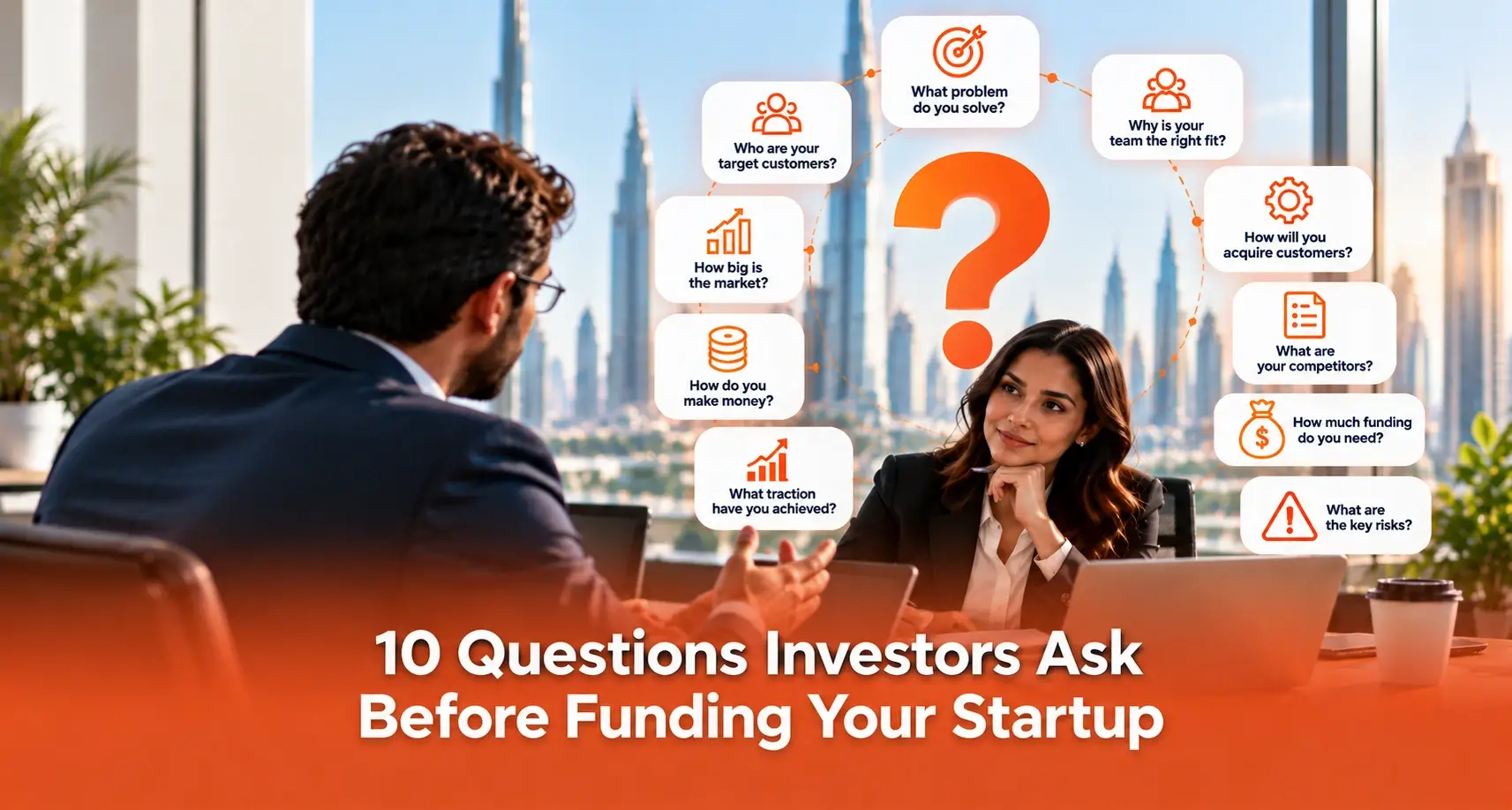
Angel investors may ask detailed questions about the business before deciding whether to invest. Founders should be prepared to discuss revenue, pricing, customer acquisition, market size, competitors, operating costs, margins, growth plans, valuation, and funding requirements.
Investors may also ask about potential risks and what could prevent the business from achieving its goals.
Founders do not need to have every answer immediately, but they should demonstrate that they understand their business and are prepared to address difficult questions honestly.
Preparation can make investor conversations more confident and productive.
Explain How the Investment Will Be Used
Investors want to understand how their capital will contribute to business growth. Founders should clearly explain how the funding will be allocated.
Investment may support product development, technology, hiring, marketing, sales, customer acquisition, research, or geographic expansion.
Connecting the funding request to measurable milestones makes the investment opportunity easier to evaluate.
For example, instead of saying that funding will support marketing, founders can explain how the capital will be used to expand customer acquisition and reach a specific growth target.
Understand Valuation and Equity
Before entering serious investment discussions, founders should understand how much equity they are prepared to offer and how the proposed investment may affect ownership.
Startup valuation should be supported by the company's stage, traction, market opportunity, revenue, growth potential, competitive position, and other relevant factors.
Founders should also understand the broader terms of an investment agreement rather than focusing only on the amount of capital offered.
Getting appropriate professional advice can help founders understand the implications of investment terms before accepting an offer.
Follow Up Professionally
Fundraising conversations do not always result in an immediate investment decision. Investors may need additional information, time to conduct due diligence, or further discussions with their partners and advisors.
A professional follow-up process can help maintain momentum. Founders can send relevant updates, respond promptly to questions, and share meaningful business progress.
However, follow-ups should provide value rather than repeatedly asking whether the investor has made a decision.
Consistent and professional communication can help founders build stronger long-term relationships with potential investors.
Avoid Common Investor Outreach Mistakes
Even promising startups can struggle with fundraising because of ineffective outreach. Common mistakes include contacting unsuitable investors, sending generic messages, providing unclear funding requirements, using unrealistic financial projections, and failing to demonstrate traction.
Another mistake is sending an overly long first message. Investors often receive numerous opportunities, so the initial communication should be concise and focused.
Founders should also avoid exaggerating market potential or hiding business challenges. Transparency can help establish trust and demonstrate maturity.
Build Relationships Beyond the Funding Round
Successful angel investor outreach should not end once a founder receives funding. Angel investors can become valuable long-term partners who provide industry knowledge, introductions, mentorship, and strategic guidance.
Founders should maintain professional relationships with investors by sharing relevant progress updates and communicating important developments.
Strong investor relationships can also help during future fundraising rounds, particularly when existing investors introduce founders to other potential investors.
Angel Investor Outreach Is About Building Trust
The most effective angel investor outreach is not simply about sending pitch decks or asking for money. It is about building trust and demonstrating why the startup represents a credible investment opportunity.
Founders should focus on solving a meaningful problem, validating their market, building a scalable business, demonstrating traction, and communicating their opportunity clearly.
The right investor can provide more than capital. Their experience, network, industry knowledge, and strategic support can help a startup navigate challenges and accelerate growth.
Final Verdicts: Turning Investor Interest Into Startup Funding
Attracting angel investment can be challenging, but a structured approach can improve the fundraising process. From researching suitable investors and building relationships to preparing a strong pitch and demonstrating measurable traction, every stage of investor outreach contributes to credibility.
Understanding how to approach angel investors requires founders to think from the investor's perspective. Investors want to understand the opportunity, the risks, the growth potential, and the team responsible for executing the plan.
By combining targeted angel investor networking , personalized communication, strong business fundamentals, and consistent follow-up, founders can increase their chances of building meaningful investor relationships and securing the capital needed to grow.
Ready to Connect With the Right Angel Investors?
The right investor outreach strategy can help turn a promising startup into an investment-ready opportunity. If you are finding angel investors , preparing your fundraising strategy, or looking to strengthen your investor pitch, Start Fund Now can help you move from preparation to meaningful investor conversations.
Have a startup with investment potential?
Looking for suitable angel investors?
Ready to improve your investor pitch?
Planning your next funding round?
Call Start Fund Now at +971 54 749 4471 or Email: info@startfundnow.com and take the next step toward building an investment-ready and scalable business.
Explore Your Investor Opportunities Today. Your idea has potential. Let’s help you turn it into an opportunity.