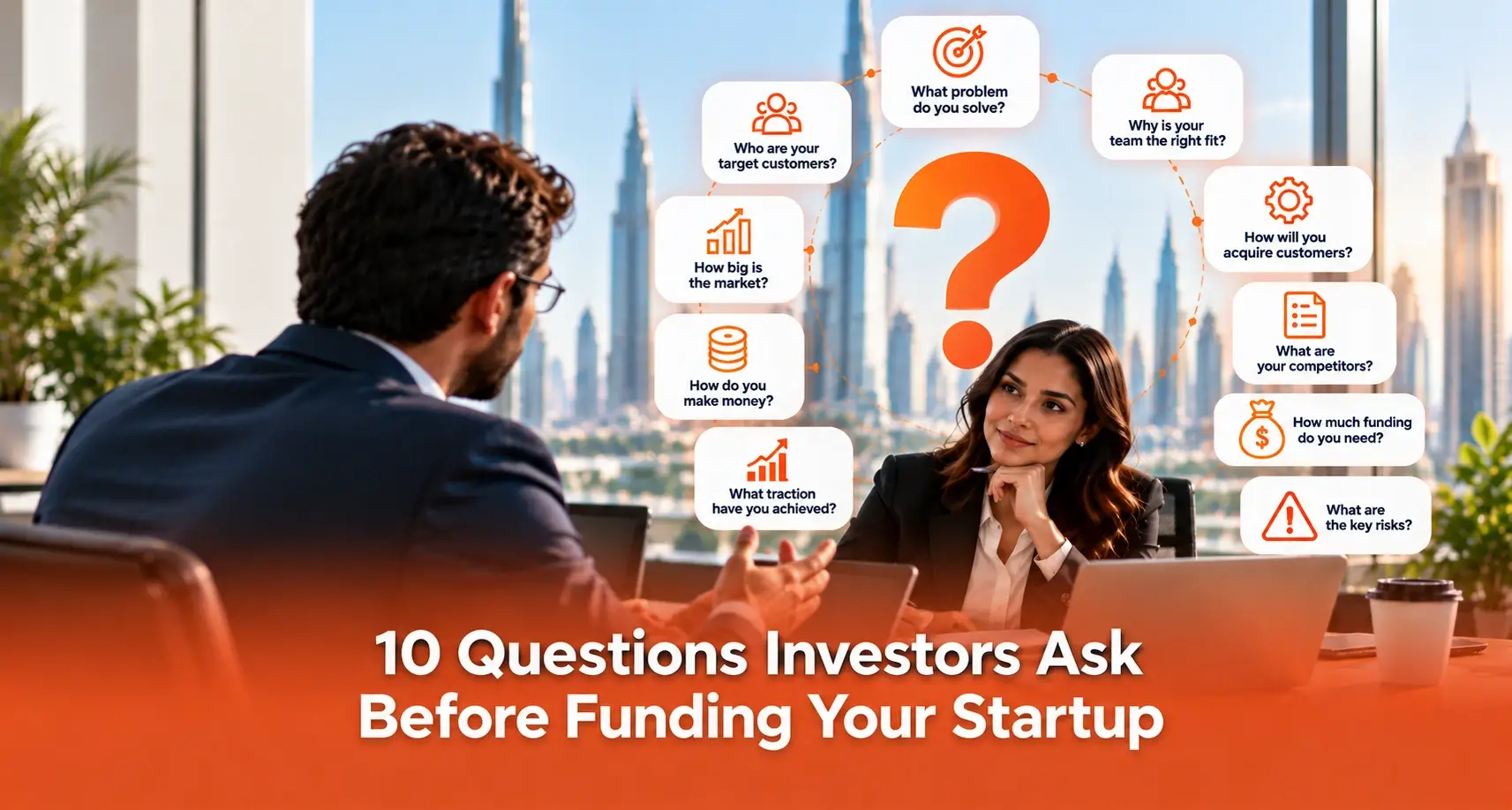

Building a startup with strong growth potential requires more than an innovative idea. Founders need the right product, market opportunity, business model, team, and capital to turn their vision into a scalable company. For startups aiming for rapid expansion, venture capital for startups can provide access to funding, expertise, networks, and strategic support. However, attracting venture capital investors in a competitive market requires careful preparation, measurable traction, and a clear understanding of what investors are looking for.
Understand How Venture Capital Works
Before approaching venture capital firms, founders should understand the investment process. Venture capital investors typically provide funding to startups they believe have the potential to achieve significant growth and generate substantial returns.
Unlike traditional business financing, venture capital usually involves exchanging equity in the company for investment. Investors may also provide strategic guidance, industry connections, hiring support, and access to future funding opportunities.
Understanding VC investors' expectations can help founders determine whether venture capital is right for their business and prepare more effectively for fundraising conversations.
Build a Business With Significant Growth Potential
Venture capital investors generally look for businesses capable of growing substantially over time. A startup may have strong revenue today, but investors also want to understand how large the opportunity could become.
Founders should clearly communicate the size of their target market, customer demand, competitive advantage, revenue opportunity, and expansion potential. The business model should demonstrate how the company can scale across customers, locations, products, or markets.
A strong growth story can make a startup more attractive to investors looking for opportunities with significant long-term potential.
Validate Your Product and Market
Market validation is an important part of preparing for venture capital funding . Investors want evidence that customers actually need the product or service and that the startup has a realistic opportunity to capture market share.
Validation can come from paying customers, recurring revenue, user growth, retention, successful pilot programs, partnerships, customer feedback, or strong product adoption.
Founders should focus on presenting measurable evidence rather than relying entirely on assumptions. Demonstrating genuine demand can give investors greater confidence in the startup's ability to grow.
Develop a Scalable Business Model
Scalability is one of the key factors investors consider when evaluating VC funding for startups . A business should have a clear path toward increasing revenue while managing costs effectively.
Founders should explain how the company generates revenue, how customers are acquired, what the average customer value is, and how margins can improve as the business expands.
Whether the startup uses subscriptions, transactions, licensing, marketplaces, software, or another revenue model, investors should be able to understand how the business can scale without operational complexity growing disproportionately.
Create an Investor-Ready Pitch Deck
A compelling pitch deck is essential when approaching venture capital investors. It should present the startup's opportunity clearly and demonstrate why the company deserves investment.
A strong pitch deck generally includes the problem, solution, market opportunity, product, business model, competitive landscape, traction, customer acquisition strategy, financial projections, team, funding requirement, and future growth plans.
The presentation should be concise and focused. Instead of overwhelming investors with information, founders should create a clear narrative that explains the problem, demonstrates the opportunity, and shows why their company is positioned to succeed.
Know How to Attract VC Investors
Understanding how to attract VC investors requires more than sending pitch decks to as many firms as possible. Founders should identify investors whose investment criteria match their industry, stage, geography, funding requirements, and growth model.
Researching a firm's existing portfolio can provide valuable insight into its preferred sectors and investment approach. Founders should also consider whether an investor can offer strategic value beyond capital.
A targeted investor outreach strategy can increase the likelihood of meaningful conversations and help founders build stronger relationships with potential investors.
Demonstrate Strong Startup Traction
Traction can significantly influence investor interest. Depending on the startup, useful traction metrics may include revenue, monthly recurring revenue, customer growth, retention, engagement, conversion rates, partnerships, product adoption, or geographic expansion.
Founders should identify the metrics that matter most for their specific business and demonstrate how those numbers are changing over time.
Investors are often interested in the momentum behind the business, not simply its current size. Consistent progress can demonstrate that the startup understands its market and has the ability to execute its growth strategy.
Build a Strong and Capable Founding Team
A great business idea still requires a capable team to execute it. Venture capital investors often evaluate the founders' experience, skills, industry knowledge, leadership ability, and commitment to the business.
Founders should clearly explain why their team is uniquely qualified to solve the identified problem. Any important gaps should also be addressed through hiring plans, advisors, or strategic partnerships.
A strong team can increase investor confidence by demonstrating that the startup has the leadership and expertise required to navigate challenges and scale successfully.
Prepare Realistic Financial Projections
Financial projections help investors understand the startup's growth expectations and capital requirements. Founders should prepare realistic forecasts based on clearly defined assumptions.
Revenue projections should be supported by factors such as customer acquisition, pricing, conversion rates, retention, market expansion, and sales capacity. Expenses should account for hiring, technology, marketing, operations, and other major costs.
Rather than presenting overly optimistic numbers, founders should demonstrate that they understand the financial drivers of their business and can explain how investment will support future growth.
Determine How Much Capital You Need
An important part of a startup investor strategy is determining the right amount of funding to raise. Asking for too little can leave the startup underfunded, while raising significantly more than required may create unnecessary dilution or unrealistic expectations.
Founders should connect their funding requirement to specific milestones. The capital may be used to expand the team, develop products, increase marketing, enter new markets, strengthen technology, or improve operations.
Investors should be able to see what the funding will accomplish and how those milestones can increase the company's value.
Choose the Right Stage for Venture Capital
Not every startup needs venture capital immediately. Founders should consider whether the company has reached a stage where external equity investment can accelerate growth.
Some startups may first focus on developing a minimum viable product, validating demand, acquiring early customers, or generating initial revenue. Once the business demonstrates sufficient potential and traction, venture capital may become a more suitable funding option.
Choosing the right fundraising stage can help founders approach investors with stronger evidence and a clearer growth story.
Build Investor Relationships Early
Fundraising should not always begin when a startup urgently needs money. Building relationships with investors, founders, accelerators, industry professionals, and startup communities well in advance can create valuable opportunities.
Founders can share meaningful company updates, attend relevant industry events, participate in startup networks, and develop relationships with potential investors before formally raising a round.
When fundraising eventually begins, existing relationships can make investor outreach more personal and productive.
Strengthen Your Online Presence
Investors often research a startup and its founders before deciding whether to take a meeting. A professional website, strong brand identity, credible founder profiles, and consistent online communication can support the company's investment story.
The startup's public information should clearly explain what the company does, who it serves, what makes it different, and how it is progressing.
A professional digital presence can reinforce investor confidence and demonstrate that the founding team understands the importance of building a credible and scalable company.
Prepare for Investor Due Diligence
Venture capital investors typically conduct detailed research before making an investment decision. Founders should therefore organize important business documents before entering advanced fundraising discussions.
These may include financial statements, incorporation documents, ownership information, contracts, intellectual property records, customer data, employee information, and other relevant business materials.
Being prepared for due diligence can make the fundraising process more efficient and demonstrate professionalism.
Avoid Common Venture Capital Fundraising Mistakes
Startups can lose investor interest by making avoidable fundraising mistakes. Common problems include unrealistic valuations, weak financial projections, unclear funding requirements, insufficient market research, poor understanding of competitors, and approaching investors who are not a suitable fit.
Another common mistake is focusing too heavily on the product while failing to explain the business opportunity and path to scale.
Founders should also avoid treating every investor conversation the same. A customized approach that considers the investor's portfolio, interests, and investment stage can produce more meaningful discussions.
Understand Equity and Investor Expectations
Before accepting venture capital for startups , founders should understand how the investment will affect ownership and decision-making. Venture capital typically involves giving investors an equity stake in exchange for capital.
Founders should carefully evaluate the proposed valuation, dilution, investment terms, governance structure, and potential future funding requirements.
The right investor should ideally provide more than money. Strategic knowledge, industry connections, hiring support, and access to future opportunities can create significant value for a growing startup.
Focus on Long-Term Growth
Venture capital should be viewed as a tool for accelerating a strong business rather than simply solving short-term financial problems.
Founders should have a clear plan for how investment will contribute to product development, customer acquisition, market expansion, team building, and revenue growth.
A long-term perspective can help founders make better fundraising decisions and build a company that is capable of creating sustainable value.
Venture Capital for Startups Is About More Than Funding
The most successful approach to venture capital for startups combines a strong business opportunity with clear execution, measurable traction, and effective investor communication.
Founders need to demonstrate that their startup addresses a meaningful problem, serves a valuable market, has a scalable business model, and is led by a capable team.
Venture capital can provide significant resources for ambitious startups, but attracting investment requires more than an attractive pitch. Investors need evidence that the business can execute its strategy and create substantial long-term value.
Closing Words: Turning Startup Potential Into Venture Capital Funding
Attracting venture capital can be challenging, particularly when investors have many opportunities to evaluate. However, founders who prepare strategically can improve their chances of securing investment.
From validating the market and developing a scalable business model to demonstrating traction, preparing realistic financial projections, and targeting suitable investors, every part of the fundraising process contributes to investor confidence.
Understanding how to attract VC investors is ultimately about presenting a credible business opportunity backed by evidence. The strongest founders combine a compelling vision with measurable progress, disciplined financial planning, and a clear strategy for using investment to achieve growth.
By developing the right startup investor strategy , founders can position their businesses more effectively, build stronger investor relationships, and increase their potential to secure the capital needed for the next stage of growth.
Ready to Prepare Your Startup for Venture Capital?
The right fundraising strategy can help transform a promising startup into an investment-ready business. If you are preparing to approach venture capital investors, looking for suitable funding opportunities, or developing a strategy for your next funding round, Start Fund Now can help you move from preparation to action.
Have a startup with high-growth potential?
Looking for the right venture capital strategy?
Ready to strengthen your investor pitch?
Planning your next funding round?
Reach out to Start Fund Now at +971 54 749 4471 or Email: info@startfundnow.com and take the next step toward building an investment-ready and scalable business.
Explore Your Venture Capital Opportunities Today. Your startup has potential. Let’s help you turn it into an investment opportunity .